I don't know the MG B up close from my youth. We were five children and my father was the sole breadwinner. There was no room for a second car and the first car had to be big enough for the whole family. But from the street scene of the '70s and '80s? Absolutely. That typical chrome grille, the sound of that four-cylinder, the smell of oil that lingers when such a roadster drives by. The MG B (MGB) wasn't everywhere, but you encountered it regularly. And that was no coincidence. From 1962 to 1980, 512,243 examples were built. 386,961 roadsters and 125,282 GTs. Those are figures that many modern sports cars would be jealous of. The car made sporty open-top driving accessible to the masses. Not a temperamental Italian exotic that had to go to the garage every month. Just a solid British roadster that you could drive to work, take on a tour during the weekend, and that usually just started. This is the story of that car. From its revolutionary beginning to its emotional end. And why it's still relevant today, more than forty years after production ended.
MG B Roadster in Brief (1962–1980)
The MG B (MGB) was built from 1962 to 1980 in 512,243 examples: 386,961 roadsters and 125,282 GTs. The car received a revolutionary unibody construction (monocoque), a reliable 1798cc BMC B-Series engine, and optional Laycock overdrive. From chrome bumper to rubber bumper—this is the story of one of the most successful British roadsters ever.
Why the MGA No Longer Worked: The Birth of the MG B
The MGA was beautiful. No misunderstanding about that. With its voluptuous lines and classic proportions, it was a gorgeous car. But by 1960 it was hopelessly outdated. The problem lay in the classic ladder chassis on which the body rested. Those thick steel tubes made for a heavy car with little interior space. The luggage space? You could barely fit a weekend bag in there. And because of those high chassis beams, the seats also sat high, which compromised headroom. Syd Enever, the man who had designed the MGA, knew it had to be different. He had experienced the limitations of the old concept himself. His solution was radical for the time: no separate chassis anymore. The new car, internally called Project EX205, would get a self-supporting body. Chassis and bodywork became one welded whole, a monocoque. This had three major advantages. First, the car was much stiffer, which benefited handling, less twisting in corners and tighter steering. Second, everything could be lower, which provided more space in the cockpit without the car becoming larger. More headroom, lower seats, more spacious luggage space. And third, you finally had something like a crumple zone. Although no one called it that in 1962. The monocoque construction, with its specially designed front subframe, offered a relatively well-thought-out crash structure for its time. Don Hayter designed the body, with subtle influences from Pininfarina. Where the MGA was round and voluptuous, the B got tight, modern lines. Surprisingly aerodynamic for its time. On September 20, 1962, it stood at the Earls Court Motor Show in London. The public was immediately enthusiastic. Within a few months, the dealers were full of orders.
The Engine: 1798cc BMC B-Series, Simple and Reliable
They chose the BMC B-Series engine, enlarged to 1798cc. Nothing special really. The same block you'd find in an Austin-Healey or even a taxi. But that was exactly the point. The engine was proven. Simple to maintain. No exotic carburetors that constantly needed adjustment. No parts that could only be obtained in Milan.
At launch it produced 95 hp at 5,400 rpm. That sounds modest now, but with 149 Nm of torque at low revs, the car pulled nicely. This high torque at low revs made the car easy to drive without much shifting—a characteristic that was essential for success in the American market. You reached 100 km/h in just over 11 seconds. The top speed was around 165 km/h. For 1962, that was more than enough to keep up with your friends on the highway. The gearbox had four gears, but, and this is important, the first gear had no synchromesh. That meant you either had to be completely stationary before downshifting to first, or you had to master the art of double-declutching. Old school. But those were the times. Drivers learned to deal with it, or they bought the optional overdrive.
Laycock Overdrive: The Long-Distance Cruiser
That Laycock de Normanville overdrive was a blessing. It worked on third and fourth gear and made the B an excellent long-distance cruiser. Ideal for a weekend to the coast or, for the brave, to the continent. With the overdrive engaged, the engine revved quietly on the highway. That saved fuel and provided a pleasant engine sound.
Technical Specifications MG B Roadster
- Engine: BMC B-Series 1798cc four-cylinder
- Power: 95 hp at 5,400 rpm (early models), later varying due to emission requirements
- Torque: 149 Nm at low revs
- 0–100 km/h: ~11 seconds
- Top speed: ~165 km/h
- Gearbox: 4-speed with optional Laycock overdrive (on 3rd and 4th gear)
- Construction: Unibody (monocoque)
- Production: 512,243 examples (1962–1980)
MG B Roadster Model Years and Differences: From Mark I to Rubber Bumper
The MG B went through different phases between 1962 and 1980, from Mark I to Mark III, and from chrome bumper to rubber bumper. Each period brought technical improvements and visual adjustments.
1962–1967: Mark I with Pull-Handles and 5-Main Bearing Engine
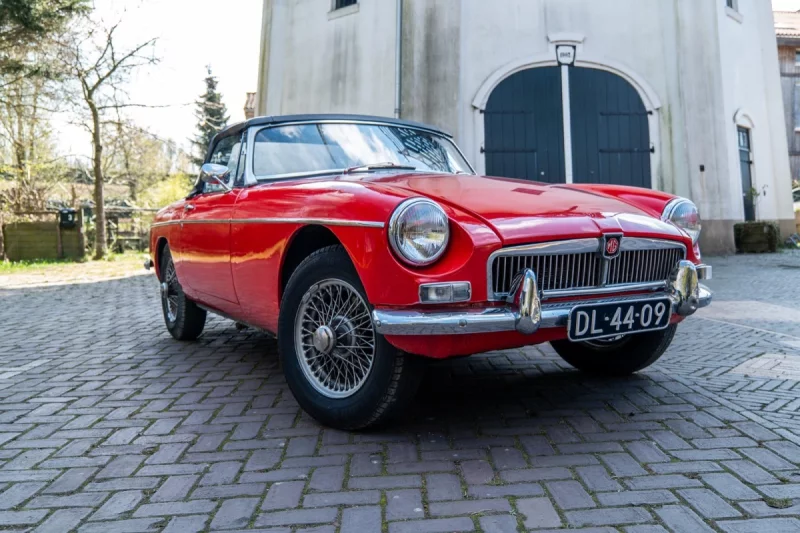
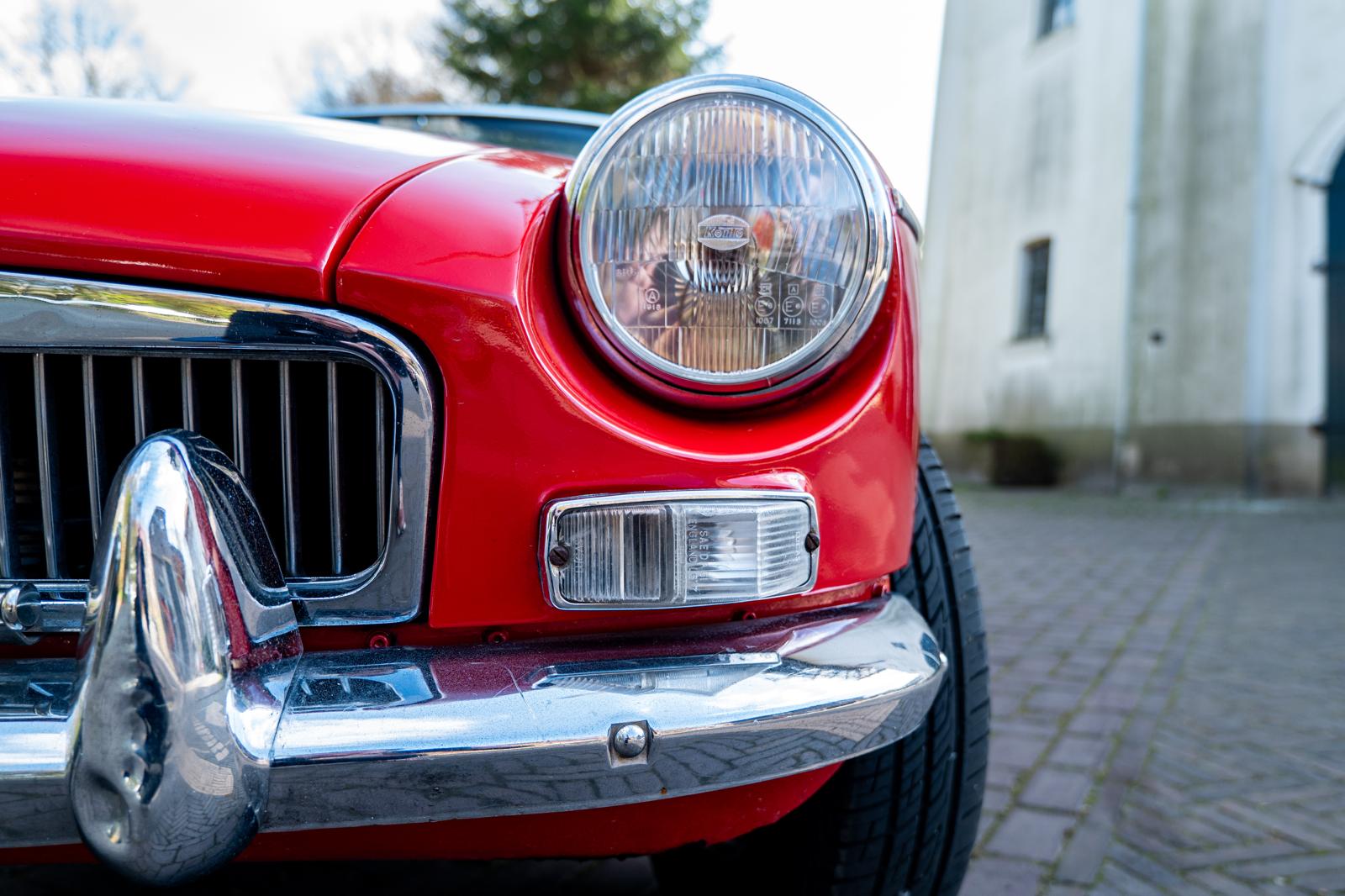
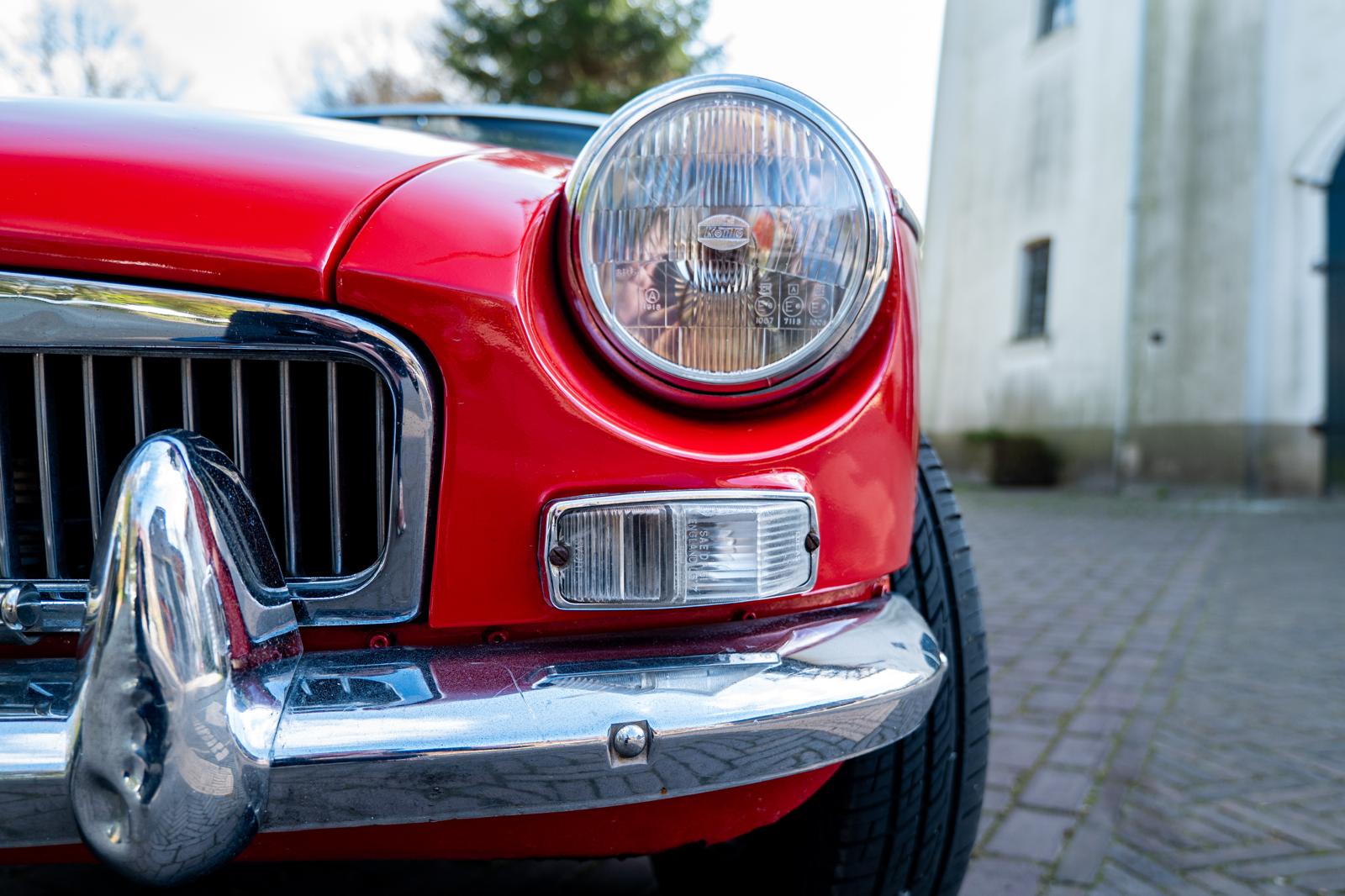
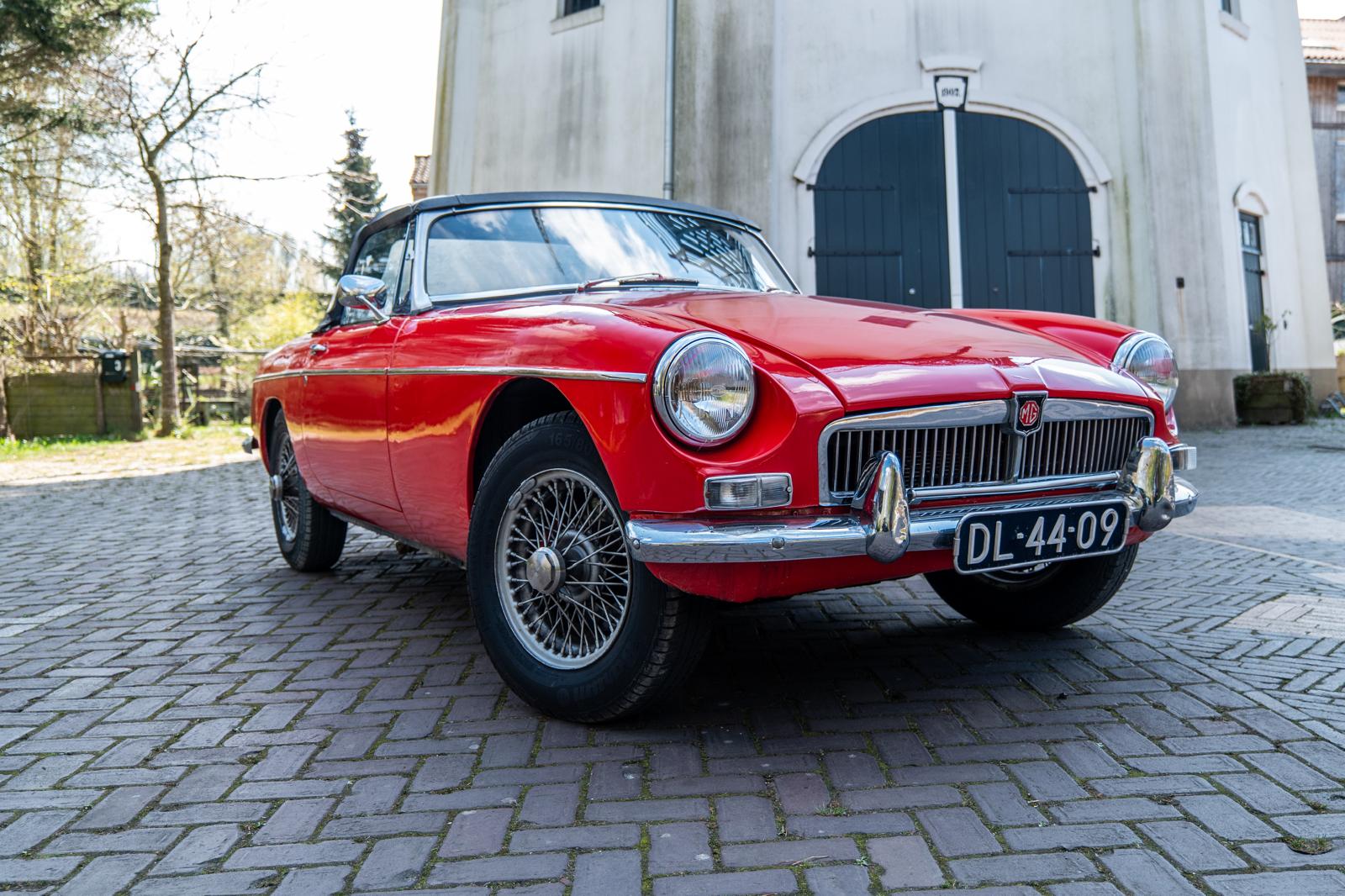
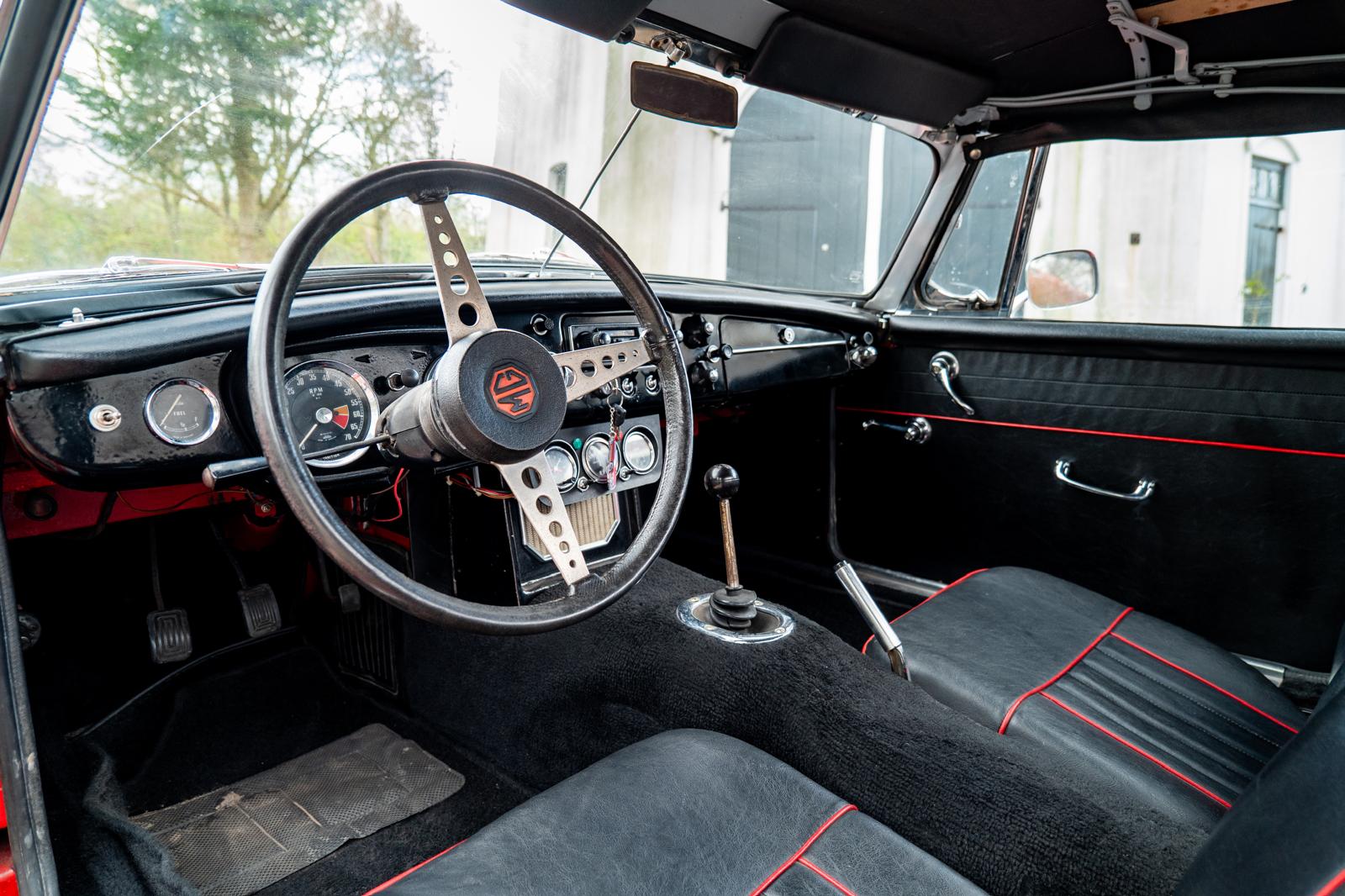
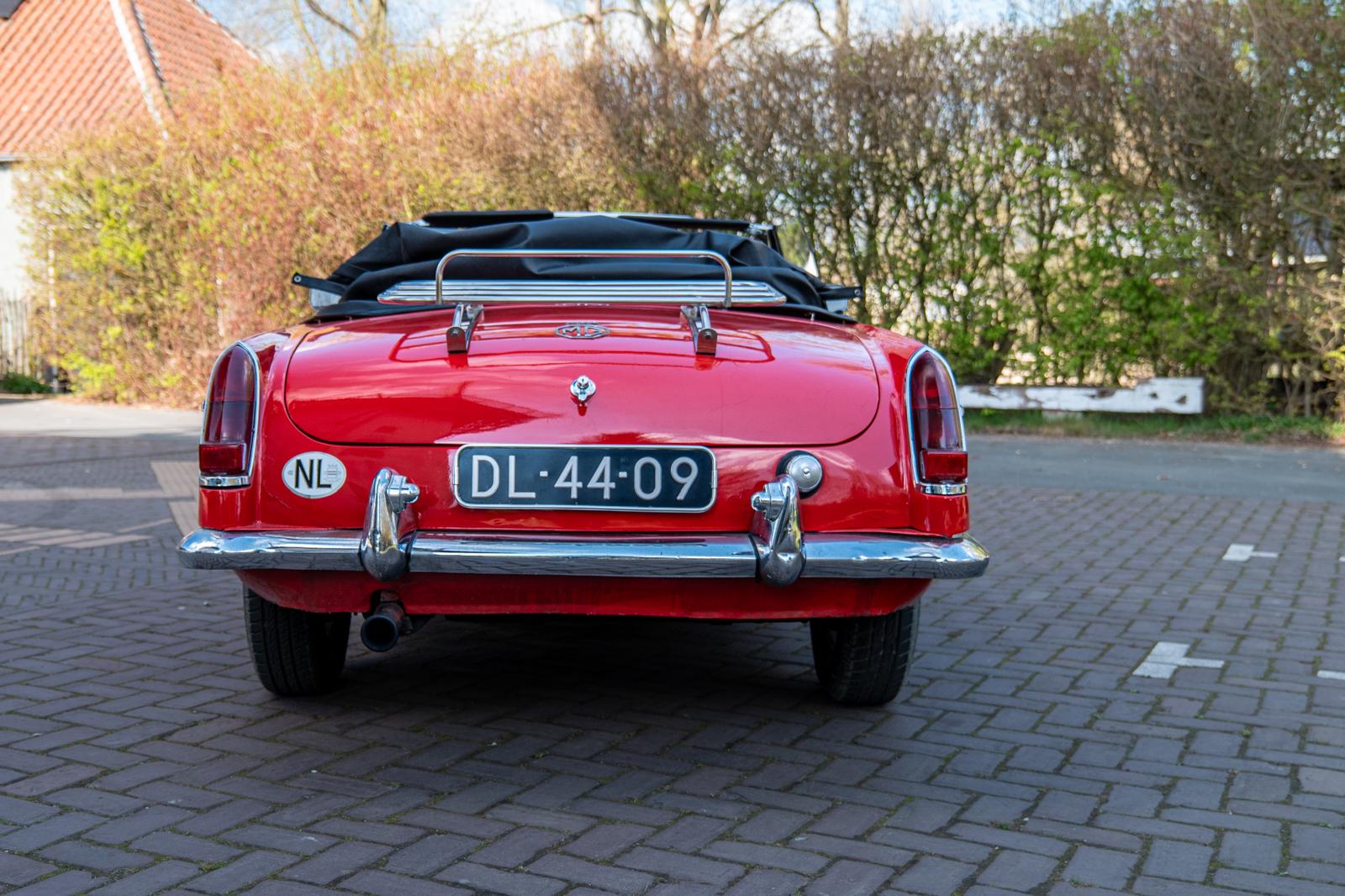
The first MG Bs, which we now call the Mark I (although it wasn't called that at the time), are recognizable by their 'pull-handle' door handles. Those chrome spoons that you pull towards you. Beautiful vintage, lovely to look at, but not really safe. In a collision they could easily unhook. In April 1965 they were replaced by push-button handles—safer, but according to purists less beautiful. More important was what happened to the engine in October 1964. The original crankshaft had only three main bearings—the so-called 3-main bearing. That worked fine, but at high revs the engine could become somewhat shaky and wear faster. The new engine got five bearings—the 5-main bearing. That made it slightly less "rev-happy," but considerably more durable and smoother. For daily use, this was an important improvement. So there exists a small group of cars—built between late 1964 and April 1965—that combine the beautiful pull-handles with the technically superior 5-bearing engine. These are nowadays gems for collectors who know the difference. They offer the best of both worlds: the classic aesthetics of the early cars with the reliability of the later engine. Our MG B is a British roadster from 1965 in Signal Red with the classic pull-handle door handles and the reliable 5-main bearing engine. The combination that connoisseurs seek. In 1965 there was also a GT version, the coupe. Although this story focuses on the roadster, the GT is relevant because it proved how robust the basic construction was. That heavier coupe showed that the MG B chassis could handle much more weight and load. Later the GT even got a Rover V8, which proved that the chassis could handle much more power than the standard four-cylinder ever produced.
1967–1969: Mark II with Full Synchromesh
In 1967 the B received a thorough update. This is called the Mark II, although British Leyland didn't use that designation consistently. Visually you hardly notice it. The reverse lights now sit on the rear panels instead of on the bumpers. Under the skin, the car became much better. Finally the gearbox got synchromesh on all gears, including first. No more fuss with double-declutching or coming to a complete stop. An automatic gearbox also became available as an option, although it was rarely chosen by enthusiasts. The MG B that you can rent from us now has a synchronized gearbox. The old Banjo rear axle—which owed its name to its shape—made way for a Salisbury axle, also called tube-type. The Banjo had a tendency to twist or leak under heavy use. The Salisbury axle was much stronger, could handle considerably more power and was much more durable. An important upgrade for those who wanted to use the car sportily. And the old-fashioned dynamo was replaced by a modern alternator. Finally sufficient power, even when the engine was idling. No more weak lighting in city traffic, no battery that ran flat after a short drive. 1968 was also the year that BMC merged with Leyland Motors to form British Leyland. That sounds boring, but it would have enormous consequences. Suddenly MG had to compete with sister brand Triumph within the same company. The TR6 and Spitfire were internal competitors. Internal politics became more important than the customer. That would ultimately prove fatal for MG.
1969–1974: "Mark III" with Black Grille (Chrome Bumper Period)
From late 1969 the car gradually changed appearance. Enthusiasts often speak of the "Mark III," although British Leyland never officially used that term consistently. The aesthetics of the '70s made their entrance. The beautiful chrome grille disappeared. It was replaced by a black, recessed aluminum grille. The classic steel dashboard, beautiful to look at, dangerous in a crash, made way for a safer dashboard covered with soft plastic. Mockingly, people called it the "Abingdon pillow." The classic toggle switches made way for safety rocker switches. The leather upholstery became vinyl, called Ambla, and the seats got a different pattern. All this came from new safety requirements in the United States. The US was by far the most important export market for MG. Washington dictated what was allowed and required in a car. The result was safer dashboards that caused less injury in a collision, better lighting. According to purists also a lot more boring. But the performance of the engine remained reasonably stable, although emission requirements in the US meant that the compression ratio had to be lowered, which compromised peak power. The period 1969–1974 is also called the chrome bumper period by enthusiasts, while everything from 1974 falls under the rubber bumper period.
1974–1980: The Rubber Bumper Period
And then came 1974. The year everything changed. A challenging year for car designers worldwide, and the MG B was hit hard. The American government introduced strict crash safety standards. A car had to withstand an impact of 5 miles per hour—8 km/h—without damage to safety-related components. The elegant chrome bumpers of the B offered no protection against that. British Leyland had no money to redesign the car. The solution was drastic: massive bumpers of black polyurethane with a heavy steel core, protruding several centimeters. Budget-driven and not beautiful, but effective. Additionally, there was a problem with headlight height. American law required a minimum height for headlights. The MG B was too low. Instead of redesigning the nose of the car, they decided to raise the entire suspension by 1.5 inches, approximately 3.8 centimeters. The result was disastrous for handling. By raising the center of gravity and initially omitting the anti-roll bars, the tight handling of the MG B was compromised. The car became less tight and more prone to body roll. Only in 1977 did they put the anti-roll bars back, particularly the front bar became standard again, which made the handling acceptable again. Performance also suffered. Emission requirements became increasingly strict, especially in California. In the most severe specification, power in the US dropped to a measly 63 hp. European versions retained more power of around 84 hp, but were still slower than their predecessors due to the heavy bumpers and higher air resistance. Yet the car continued to sell. In fact, the late '70s were very successful in terms of sales figures. The rubber bumper models were more comfortable and more modernly equipped. People apparently still wanted an affordable roadster. Even with rubber bumpers.
MG B in Motorsport: Le Mans, Monte Carlo and SCCA
You might not expect it from such an amiable touring car, but the MG B has a respectable track record in motorsport. The BMC Competitions Department deployed the car for tough international races. Not to win, but to demonstrate reliability. And that worked.
24 Hours of Le Mans (1963)
In 1963 Paddy Hopkirk and Alan Hutcheson drove a specially prepared MG B through the (also somewhat tragic) 24 Hours of Le Mans. They reached the finish, which was already an achievement for most cars at that time. For BMC, completing this endurance race was a victory in itself. In MG history, finishing Le Mans is considered an important class success—proof that the car was reliable enough for the toughest test in motorsport.
Monte Carlo Rally (1964)
The MG B also proved itself in rallies. In the 1964 Monte Carlo Rally, one of the toughest rallies in the world with snow, ice and treacherous mountain passes, MG B drivers achieved class successes in the GT category. These achievements were crucial for brand image, especially in the United States.
SCCA Championships (USA)
Even more important was the success in America. There the B dominated for years in the production classes of the SCCA championships—the Sports Car Club of America. That proved that the car, when properly prepared, was an extremely capable and reliable racer. For MG, that proof of quality was more important than any advertising campaign.
MG B Reliability and Maintenance
The MG B is known for its solidity. The 1798cc BMC B-Series engine is simple and easy to maintain. No exotic parts, no mysterious electrics. Just a robust engine that you can maintain with basic tools. Parts are easier to get today than when the car was new. British Motor Heritage produced complete bodies for years, and a worldwide industry of specialists has emerged. From Groningen to Maastricht you'll find MG clubs full of people sharing knowledge. Forums are full of detailed knowledge. You don't need to take out a mortgage to get parts. Rust is the biggest enemy, as with any British classic car. The sill construction, wheel arches and floor pan require attention. But if you prevent instead of cure, the MG B remains reliable for years. Regular greasing, oil changes, carburetor adjustment—these aren't secrets but routine.
The End: October 1980 and the Limited Edition
British Leyland was bleeding at the end of the '70s. Michael Edwardes, the new chairman of BL, had to drastically restructure. The factory in Abingdon was outdated. Due to the extremely strong pound against the dollar, MG lost money on every car that went to America.
The decision was painful but inevitable. Abingdon had to close. Production of the B had to stop. Workers protested. Fans around the world wrote angry letters. It didn't help. On October 22, 1980, the very last MG B rolled off the line. To mark the farewell, they built 1,000 "Limited Edition" roadsters. The British version was finished in bronze metallic, the American in black. With that last car came an end to eighteen years of production. And to an era. The factory where Cecil Kimber had started building sporty MGs in the '20s closed. The MG badge would only survive the '80s on sporty versions of the Austin Metro and Maestro. Not pleasant for those who had loved the brand.