Volkswagen T2 classic bus (T2a & T2b): history, engineering and renting in Groningen
Dec 30, 2025 • 13 minutes reading time

Volkswagen T2 classic bus (T2a & T2b): history, engineering and renting in Groningen
The Volkswagen T2 classic bus is an icon. When we think back to the 1960s and 1970s, an image almost automatically appears. A pastel-colored bus, perhaps with a pop-up roof and flower stickers, parked at the edge of a beach or in a forest. The Volkswagen T1, the legendary “Split Screen,” was the founder of this phenomenon. But it was its successor, the Volkswagen T2, that truly made the world mobile. The T2. Often called the “Panorama Bus” in everyday speech, and in English the “Bay Window.” This bus marked the transition from charming yet spartan and mainly utilitarian transport to a mature, comfortable travel companion. This is the comprehensive story of the T2a and the T2b, the VW classic bus. In this article we provide a technical and cultural overview of a bus that, more than half a century after its introduction, still makes hearts beat faster.
Renting a Classic VW T2 Bus in Groningen at Tonny’s Classic Drive
Experience the history of this icon for yourself and choose from the three unique examples in our collection. If it has always been your wish to drive a hippie bus through Groningen, then rent the classic T2 bus from us. View our complete classic car rental fleet in Groningen.
The End of the Split Screen and the Birth of the Volkswagen T2 (1967)
In 1967, Volkswagen faced an enormous challenge. The T1 was indeed a worldwide sales success and a cultural icon, but technically the design from the 1950s was beginning to show its limitations. The market demanded more safety, more interior space, better visibility and, above all, more comfort. The German engineers did not take half measures.
The basic formula was retained. The engine at the rear, air-cooled, and the driver positioned directly above the front axle. But in almost every other respect, the T2 was a completely newly developed vehicle. In August 1967, the first T2 rolled off the production line. The factory in Hannover-Stöcken was the main location, and it remained so. The most striking feature? The disappearance of the characteristic “split” in the windshield. Instead, the bus received a large, curved windshield made from a single piece. This immediately earned it the nickname “Bay Window,” because of the wide view enjoyed by its occupants.
Volkswagen T2a (1967–1971)
Features, engineering and driving experience
A new chassis and larger dimensions. Technically, Volkswagen made a major leap forward. The old swing-axle rear suspension from the Beetle, which sometimes made the T1 unpredictable in corners—the notorious “breakaway”—was replaced. The T2 received a modern rear suspension with trailing arms and double constant-velocity joints. This resulted in much more stable road handling and significantly higher ride comfort. In terms of dimensions, the bus grew considerably. The T1 had a length of 4,280 mm. Depending on the version and model year, the T2 grew to approximately 4,500 mm. An increase of more than 22 centimeters, which directly translated into more cargo space and crumple zone. The electrical system was also now fully mature. Where early T1s still ran on 6 volts, the T2 was equipped with a 12-volt system from day one.
The Early Years of the Volkswagen T2 Bus
The first generation of the T2, produced from August 1967 through July 1971, is referred to by enthusiasts as the T2a. For many purists, this is the most beautiful version of the “Bay Window.” It combines the aesthetic purity and curves of the 1960s with engineering that was already superior to that of the T1.
Our T2a in Groningen: “Siem the Safari Bus”
That classic charm can be found in our dark green T2a. This bus is a special example with a unique story. It was fully restored for a commercial campaign by the Institute of Ideas, where it was known as “Siem the Safari Bus.” Today, it is in top condition and ready at Tonny’s Classic Drive for anyone who wants to experience the pure driving feel of the late 1960s.
Exterior Features of the Volkswagen T2a
The T2a can be recognized at a glance by its friendly “face.” The indicators are located low on the front, just above the front bumper. A nice detail for car spotters: on early models, up to around 1970, the indicator lenses were white. They were later changed to amber due to regulations. The bumper itself largely determines the appearance. The iconic “Cloud White” (L581) bumpers with rubber trim were specific to the more luxurious Deluxe Microbus models. Characteristic of the T2a’s front bumper are the integrated steps, the so-called “step bumpers,” which made cleaning the large windshield easier. At the rear, throughout the entire T2a period up to and including model year 1971, we find the characteristic small, oval taillights. The air intakes for engine cooling—the “ears” on the sides at the rear—were specifically designed on the T2a as crescent-shaped vents. But one thing is certain: we greatly enjoy the beautiful appearance of our T2 buses, and it is a pleasure to see them driving around Groningen. In Groningen, such a T2 is still a real eye-catcher. Anyone who rents one quickly notices that you do not pass by unnoticed.
Interior and Engineering of the VW T2a Bus
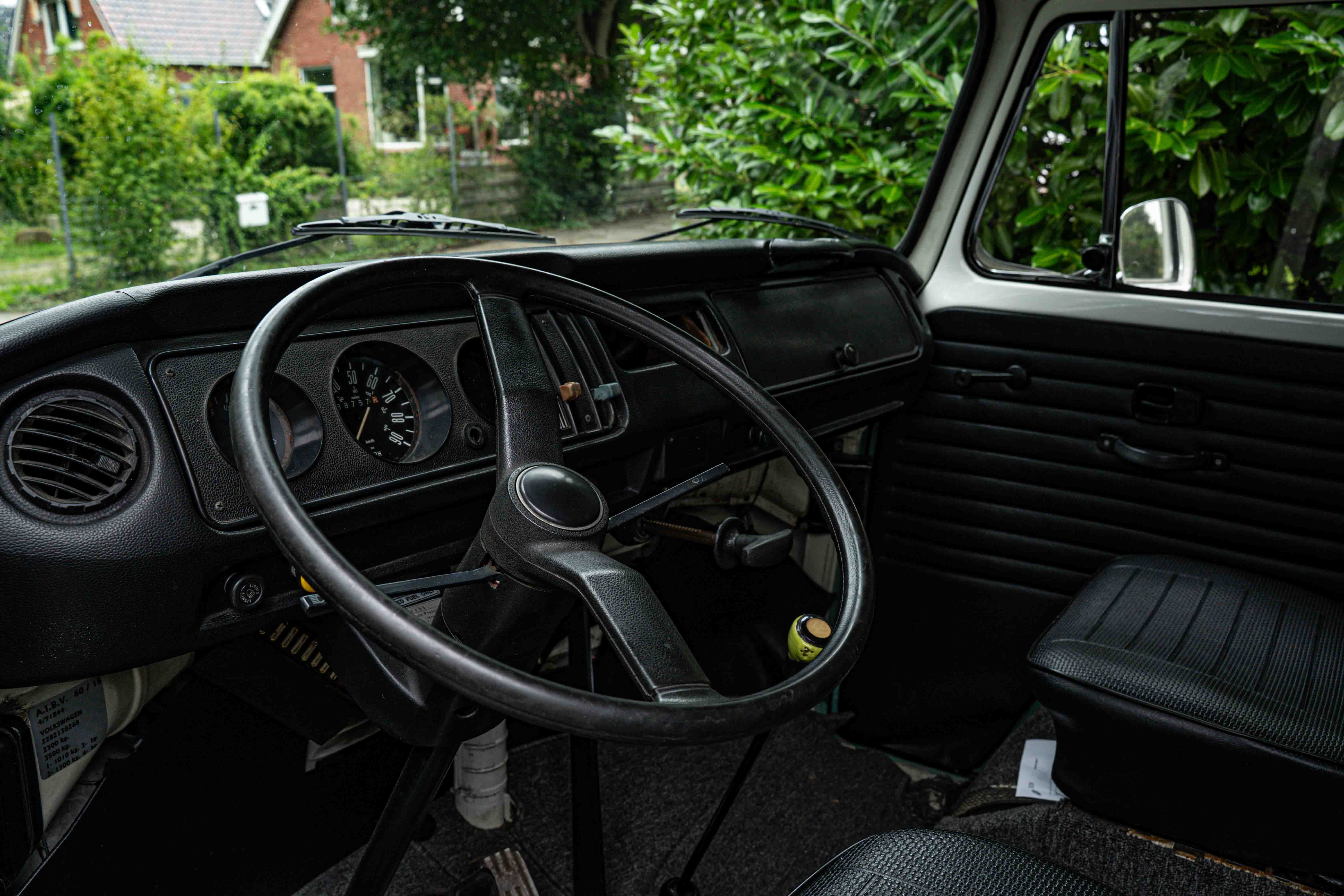
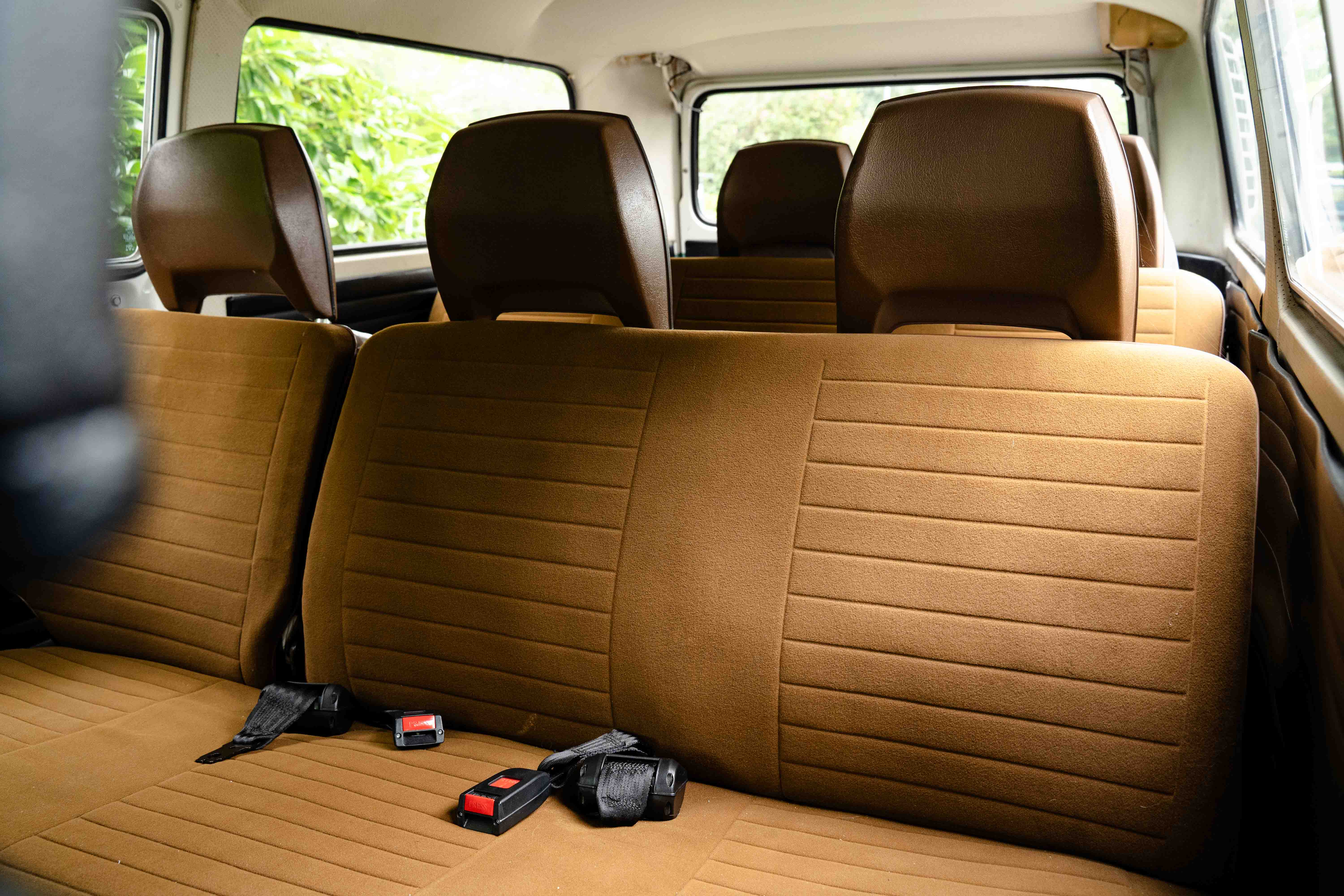
Inside, the T2a was an example of sober functionality. The dashboard was made of metal, with only the essential gauges. One of the greatest innovations of the T2a was the sliding door. Where the T1 still had awkward side-hinged doors, the T2a came standard with a wide sliding door. Incidentally, you should not expect this sliding door to close with a soft-close mechanism. You need a bit more force to close it properly. But once closed, it is truly closed.
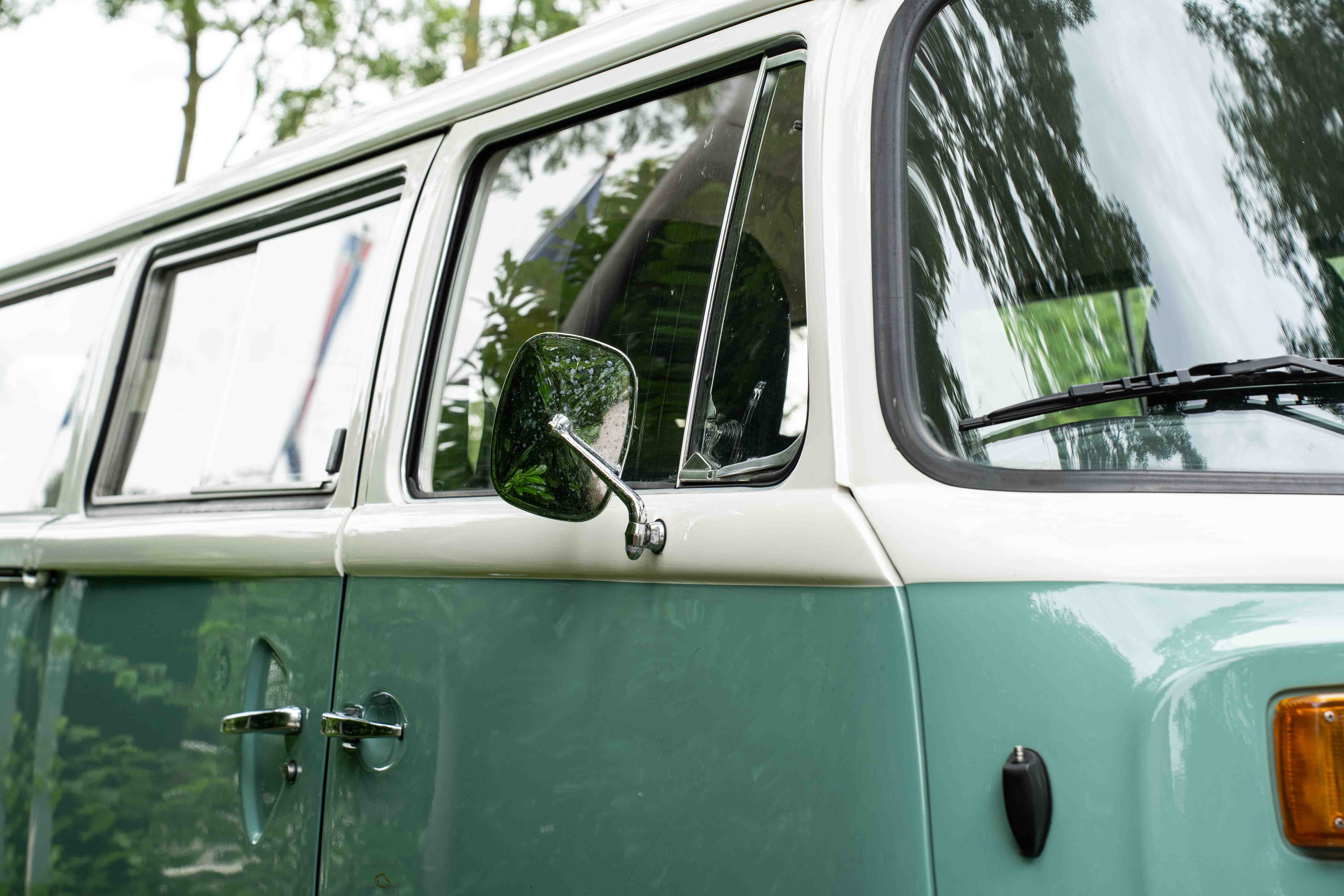
Under the engine lid initially lay the familiar 1600 cc engine with a single intake port (47 hp). From model year 1968, this was upgraded to a version with dual intake ports (50 hp). In terms of safety, an important step was taken in August 1970, model year 1971: disc brakes on the front axle became standard. When it comes to braking, the same applies—there is no power brake assist on this classic car. Just like driving, braking is also a verb in the VW T2 bus.
The Transitional Model: The T2a/b “Zwitter” (1972)
In the world of classic Volkswagens, the year 1972 is special. This is the year of the “Crossover” or, in proper German, the “Zwitter” (hybrid). Volkswagen was preparing the bus for stricter safety requirements, particularly for the important American export market. This resulted in a model year, August 1971 through July 1972, in which the bus was a unique mix.
- The rear: here we see the features of the later T2b for the first time. The small oval lights were replaced by large, rectangular taillight units, and the air intakes for the engine became larger and rectangular.
- The front: this still retained the classic face of the T2a, with the low-mounted indicators and the rounded bumpers with steps.
Technically, the Zwitter was ahead of its time. Disc brakes were already standard. More importantly, the introduction of the more powerful 1.7L Type 4 engine (66 hp), which was available as an option from the start of model year 1972, August 1971. A notable detail: only the Zwitters equipped with this new Type 4 engine received an inspection hatch in the load floor to access the engine. Models with the standard 1600 cc Type 1 engine retained the closed floor.
The Mature Bus: The Volkswagen T2b, driving experience, history and engineering (1973 – 1979)
From model year 1973, introduced at the end of 1972, the T2 underwent its largest facelift. The vehicle had to comply with new American crash safety standards. The result was the T2b, the version that would remain in production the longest in Germany.
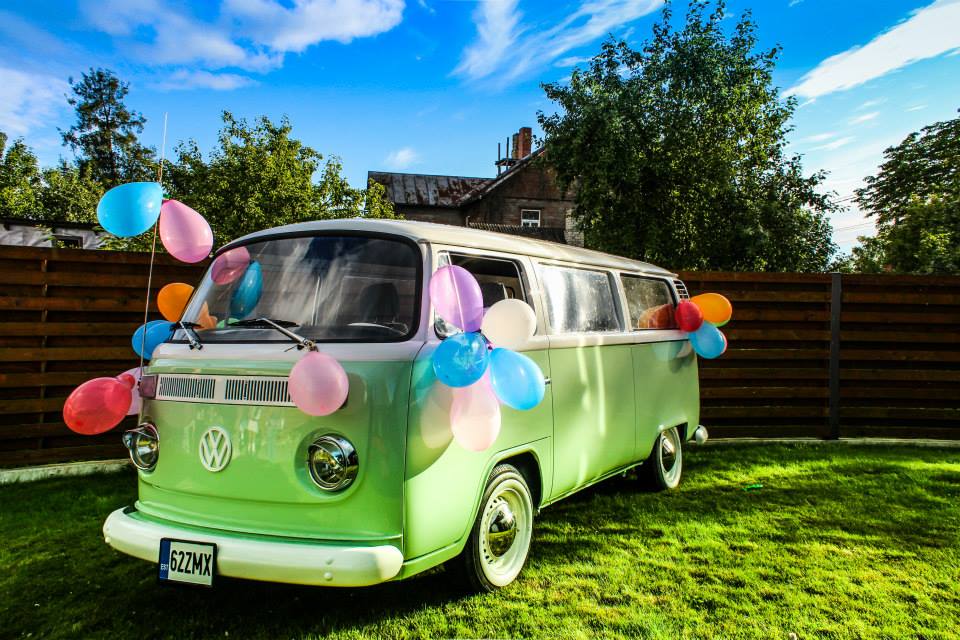
Our T2b from Estonia: a perfect restoration
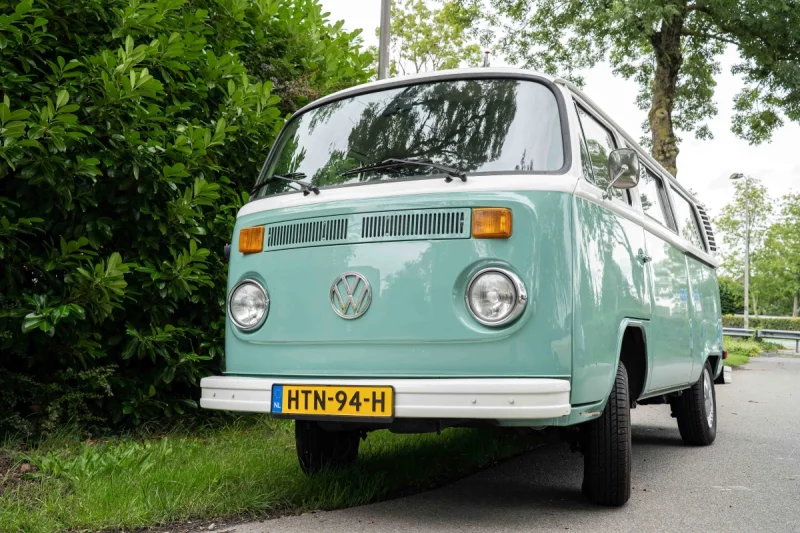
Do you want to experience what a brand-new T2b felt like in the 1970s? In our classic car fleet in Groningen, you will find a beautiful light green T2b. This example has been fully restored down to the smallest detail in Estonia. This bus is not only a feast for the eyes, but also technically superior: it is equipped with the powerful 1800 cc 4-cylinder engine, allowing it to keep up perfectly with modern traffic.
Volkswagen T2b: safety and differences in the bumpers
The most striking difference between the T2b and the T2a is the front end. The elegant, low-mounted indicators disappeared in favor of large, rectangular orange indicators high on the front panel, directly next to the air intake grilles. The bumpers also changed drastically, with major differences depending on market and model year. Europe: up to and including 1975, European buses retained relatively slim bumpers. Although some export models received wider bumpers earlier, full standardization to the wider, angular bumpers with black plastic end caps only took place from model year 1976 (August 1975). North America: here, the bus immediately received the heavy “railroad bumpers,” mounted on energy-absorbing struts.
The Revolution under the Engine Lid: The Type 4 Engines of the Volkswagen T2 Bus
The T2b marked the widespread breakthrough of the Type 4 engine, also known as the “flat engine.” Originally developed for the VW 411/412, this engine, with its flat boxer design, was particularly suitable for the bus. It fit perfectly under the load floor without sacrificing interior space. The European DIN specifications for these engines were:
- 1.7 liters (66 hp)
- 1.8 liters (68 hp) – as found in our “Estonian” T2b
- 2.0 liters (70 hp)
With the heavier engines, such as the 1800 cc unit in our rental fleet, the bus could cover long distances more comfortably and reach speeds above 120 km/h. Note: the inspection hatch in the load floor was only present on buses with these Type 4 engines.
The VW T2 as a Camper: The Westfalia Phenomenon
You cannot write a history of the T2 without mentioning Westfalia. The campers evolved technically along with the bus, and the roof constructions in particular are a study in themselves. On the T2a, early models from 1968–1970 often had the so-called SO-69 roof: a small pop-top that “popped” straight up. Only on later T2a models did the forward-hinged pop-top become more common. On the T2b, Westfalia introduced the famous rear-hinged pop-top at the launch of this model in 1973. From 1974 onward, this became standard on the popular “Berlin” and “Helsinki” versions.
The Brazilian VW T2 Chapter: The T2c (until 2013)
While production in Germany ended in 1979 to make way for the boxy, water-cooled T3—often simply called “T3” or “Vanagon”—the story of the T2 was far from over. The molds were shipped to South America. In Brazil, the T2 remained in production, leading to the so-called T2c. This model largely combines the bodywork of a T2b with elements from older models. Only from the year 2000 onward did Brazilian buses receive a raised roof (+10 cm) as standard. The end finally came in December 2013 with the “Kombi Última Edição,” after 46 years of production. The T2c buses are still regularly offered for import into the Netherlands. Be careful with these, as the build quality is inferior to that of the German-built buses.
The Future: Electric driving in a Volkswagen T2b bus in Groningen
The history of the Volkswagen T2 does not end in the past. At Tonny's Classic Drive, we are currently writing the next chapter. Our third bus, a beautiful green-and-white T2b, is currently undergoing a true transformation.
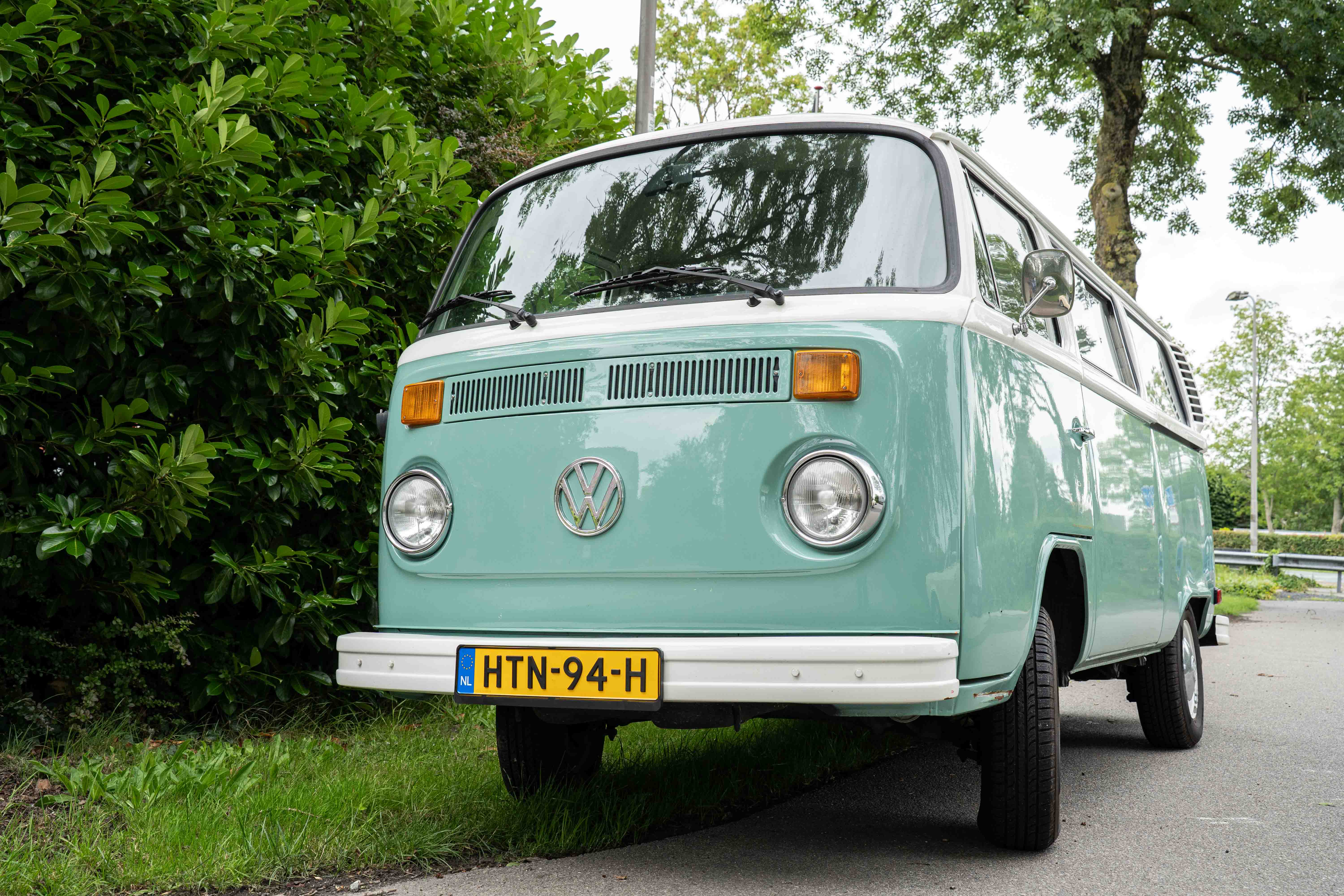
We are converting this classic to a fully electric drivetrain. In doing so, we combine the nostalgic looks of the 1970s with the sustainable technology of tomorrow. From July 1, 2026, you will be able to rent this unique, whisper-quiet classic car from us in Groningen. In short, wonderfully eco-friendly touring in a hippie bus through Groningen. Who wouldn’t want that? If you would like to drive electrically in a classic car right now, take a look at our Classic Baby Blue Metallic Volkswagen e-Beetle.
Conclusion
The Volkswagen T2a and T2b together form a bridge between the past and the present. The T2a, with its classic charm, still leaned on the aesthetics of the 1960s. The T2b, with its safety upgrades and powerful engines, paved the way for the modern van. At Tonny's Classic Drive, we bring this timeline to life. Whether you choose the historic charm of the T2a “Safari Bus,” the power and perfection of the restored T2b with 1800 cc engine, or in the future the innovative electric T2b: it is more than steel and rubber. It is a smile on wheels. Curious what it feels like to drive a classic VW T2 Bus and experience the associated hippie vibes? Contact us or first take a look at our collection.