The Classic Volkswagen Beetle: history, engineering, and an electric future (from Herbie to the e-Beetle)
Dec 19, 2025 • 16 minutes reading time
The Volkswagen Beetle: History, Engineering, and an Electric Future, from Herbie to the e-Beetle
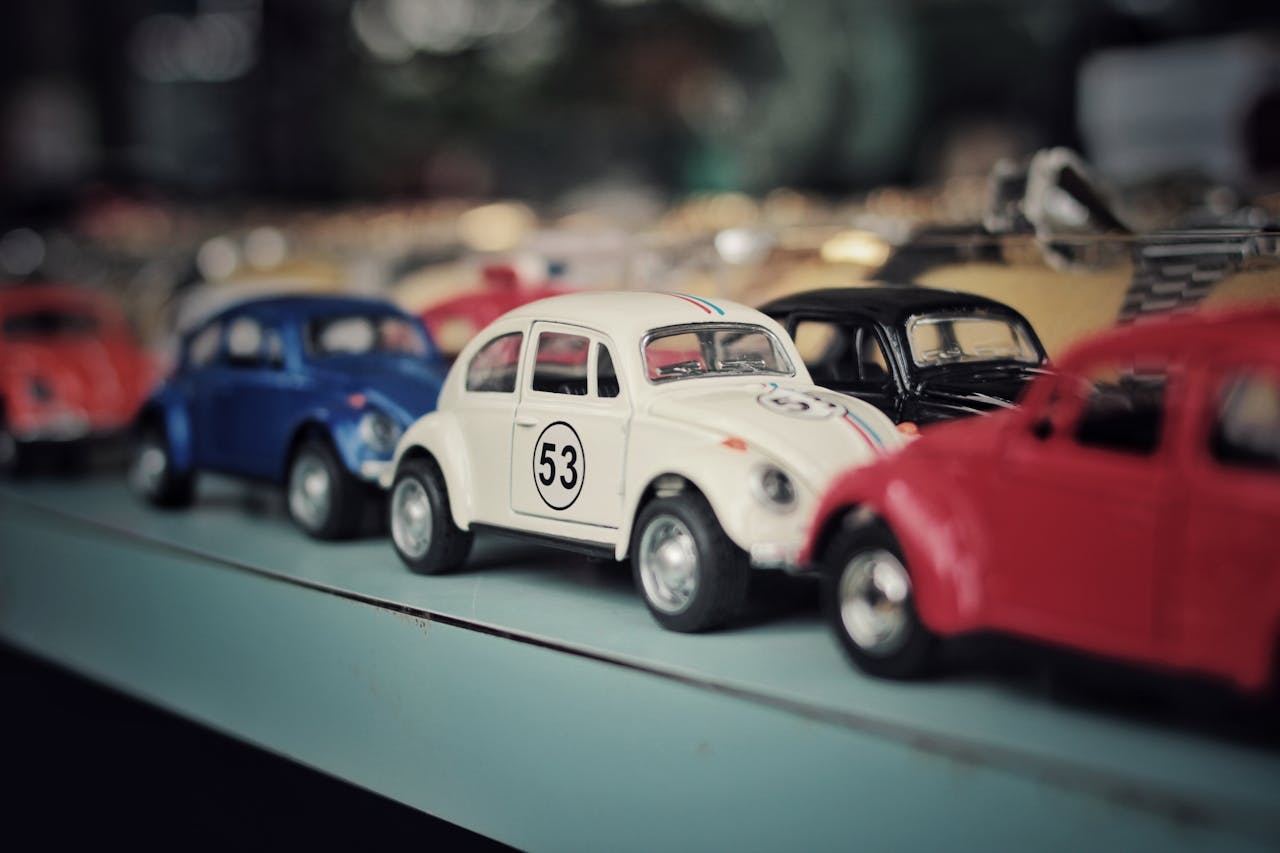
Herbie. The Beetle with number 53.
As a child I watched Herbie on German television. ZDF, ARD. Every week. That white Beetle with the red and blue stripes that could drive itself, that could think, that had a personality of its own. Because of all that German television I could speak German before I started secondary school. Nowadays kids can speak English before they start secondary school because they watch YouTube. Back then it was German television. And Herbie. That Beetle made an impression. Not only on me, on the whole world. There are few silhouettes in the world as instantly recognizable as that of the Volkswagen Beetle. With its bulbous fenders, the characteristic lines, and the friendly ‘gaze’ of the headlights, the Beetle is more than a means of transport; it is cultural heritage. From a dark beginning in the 1930s to the symbol of the “Flower Power” generation and ultimately one of the longest-running and most produced cars ever: the Beetle’s history is a wild journey through the 20th century. In this in-depth dossier we dive deep into the history, the engineering, and the legacy of the car that made the world mobile.
The Birth of the Volkswagen Beetle (1930–1939)
The Roots of an Idea
The Beetle’s story begins not on the road, but at the drawing board during a time of economic depression. In the early 1930s, the car was a luxury product, out of reach for the average worker. Austrian engineer Ferdinand Porsche had long been pursuing the idea of a small, affordable family car. He experimented with designs for Zündapp (the Type 12) and NSU (the Type 32), but these projects collapsed due to a lack of capital. The blueprints for what would become the Beetle, however, already existed in broad outlines.
The Commission: Politics and Prestige
Porsche’s ideas only gained political traction when Adolf Hitler came to power in 1933. Hitler saw mobility as a crucial propaganda tool. Although Hitler is often seen as the client, the formal commission was issued in June 1934 via the RDA (Reichsverband der Automobilindustrie). The industry itself was skeptical—they saw little profit in a cheap car—but political pressure was immense.
The requirements were extremely strict and ambitious for the time:
- Space: Room for two adults and three children.
- Speed: A cruising speed of 100 km/h (essential for the new Autobahnen).
- Consumption: No more than 7 liters of petrol per 100 kilometers.
- Price: Maximum 990 Reichsmarks.
- Engineering: The engine had to be air-cooled, because few people had garages (risk of freezing in winter, boiling radiators in summer).
The Design: Type 1
Ferdinand Porsche and his team developed various prototypes (the V1, V2 and V3) in his garage in Stuttgart. The final design was defined by a rear-mounted engine. This provided traction on the rear wheels and made a heavy driveshaft through the floor unnecessary.
The shape was revolutionary in terms of aerodynamics. The characteristic rounded form was purely functional: it minimized air resistance so that a small engine could still achieve the required 100 km/h. The suspension used torsion bars instead of leaf springs, a technique Porsche had applied earlier and patented in variations. This delivered (for its time) excellent road holding.
The KdF-Wagen and the Savers
In 1938, the first stone was laid for the factory in what is now Wolfsburg. The car was presented as the KdF-Wagen (Kraft durch Freude). German citizens could collect savings stamps in a booklet to eventually receive their car.
The bitter truth, however, is that due to the outbreak of war not a single citizen ever received a car through this system. The savers’ money was used for the war industry. Only in the 1960s, after lengthy legal battles, did affected savers receive a discount on a new Volkswagen through a compensation scheme.
The Volkswagen Beetle in the Second World War (1939–1945)
From Civilian to Military
When the Second World War broke out in 1939, the mission of the Wolfsburg factory changed immediately. The production lines for the civilian Beetle, which had barely gotten going, were converted for military equipment.
Based on the robust Beetle chassis, Porsche developed two famous military vehicles:
- The Kübelwagen (Type 82): A light, open utility vehicle. Thanks to the air-cooled engine and low weight, it proved highly effective in extreme conditions, from the heat of North Africa to the cold of the Eastern Front.
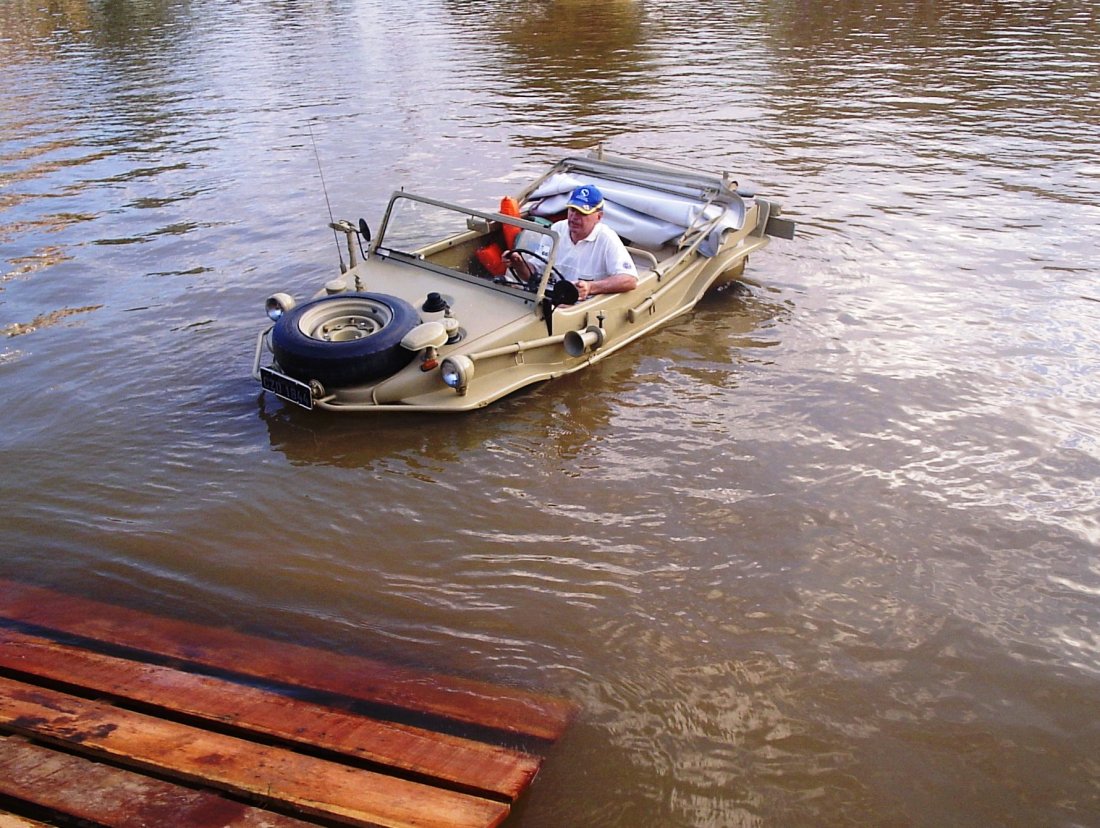
- The Schwimmwagen (Type 166): An amphibious vehicle with four-wheel drive and a fold-down propeller at the rear.
The factory itself became a primary target for Allied bombing and was largely destroyed by the end of the war. The dream of the “Volks Wagen” seemed buried under the rubble of the Third Reich.
The British Rescue of the Beetle after the War (1945–1949)
The Vision of Major Ivan Hirst
After the war, the Wolfsburg region fell under British control. The factory was originally to be dismantled as a war-reparations payment. However, the British car industry wanted nothing to do with the “ugly, noisy little car.” A now-famous report by a British commission stated: “The vehicle does not meet the fundamental technical requirements of a car... it is totally unattractive to the average buyer.” This lack of interest turned out to be the Beetle’s salvation. British army officer Major Ivan Hirst was put in charge of the ruins. Hirst was a pragmatist. He saw that the British occupation forces urgently needed light transport vehicles. He had an unexploded bomb removed from among the production machinery, repaired the roofs, and convinced the British army to place an order for 20,000 cars.
The Start of Mass Production
Under Hirst’s leadership, quality was improved and production streamlined. By 1946, 1,000 Beetles per month were already rolling off the line. The car was now officially called the Volkswagen Type 1. In 1948 the British handed over management to Heinrich Nordhoff, a former Opel manager. Nordhoff would become the architect of global success. His philosophy was simple but powerful: the car didn’t need to change radically every year; it just had to get better. Every component was constantly evaluated and improved.
Expansion and Global Success for the VW Beetle
The Dutch Connection: Ben Pon
The Netherlands played a key role in the international breakthrough. Amersfoort importer Ben Pon (Pon's Automobielhandel) was the first to see the export potential. In October 1947, the first six Beetles were shipped to the Netherlands. This was one of Volkswagen’s earliest civilian export consignments. (Ben Pon is also the spiritual father of the Volkswagen Transporter, which he sketched in his notebook based on an internal transport vehicle in the factory.)
Exclusivity: Rometsch, Hebmüller and Karmann
Although the Beetle was intended for the masses, a market for exclusive variants soon emerged. Coachbuilders used the reliable chassis for unique creations:
- Hebmüller: Built the beautiful 2-seat convertible (Type 14A), recognizable by its flowing rear end. After a factory fire, production sadly stopped early, making these models extremely rare today.
- Karmann: Built the better-known 4-seat convertible that remained in production for decades, and later the stylish Karmann Ghia.
- Rometsch: Created hand-built, luxury bodies that were nicknamed the “Beetle in a tuxedo.”
“Think Small” – Conquering America
In the 1950s, America was the land of “bigger is better.” Cars were battleships with fins and V8 engines. A small German car seemed hopeless. Volkswagen hired the advertising agency Doyle Dane Bernbach (DDB). What followed is now regarded as the best advertising campaign of all time. Instead of hiding the small size, they emphasized it with slogans like “Think Small” and “Lemon.” The ads were honest, full of self-mockery, and minimalist. They praised the air-cooled engine, fuel efficiency, and build quality. The Beetle became an anti-status symbol for people too smart to waste money.
Engineering of the Classic Beetle
Throughout the 1950s and 1960s, the Beetle was continuously refined:
- The Split Window (up to 1953): Recognizable by the rear window divided into two panes by a central bar (the “Split Beetle”).
- The Oval (1953–1957): The bar disappeared, but the rear window remained small and oval.
- The Rectangular Window (from 1958): A larger, rectangular rear window for better visibility.
In terms of engines, the power unit grew from 1100cc (25 hp) to 1200cc, 1300cc and eventually 1500cc and 1600cc (50 hp).
The Volkswagen Beetle as a Cultural Icon (1960s/70s)
From Nazi Project to Hippie Symbol
It is one of history’s greatest ironies: the car designed on Hitler’s orders became the favored vehicle of the peace movement in the 1960s. The Beetle was cheap, easy to repair yourself, and symbolized a rejection of consumer society. Painted with flowers, the Beetle (together with the T1 bus) became the face of Woodstock.
In 1968, Disney cemented the Beetle’s status as a “human” car with the film The Love Bug. Herbie, number 53, made the car immortal for a new generation.
The Peak and the Super Beetle
On February 17, 1972, the Beetle surpassed the Ford Model T’s production total (15,007,033 units), becoming the most produced car in the world.
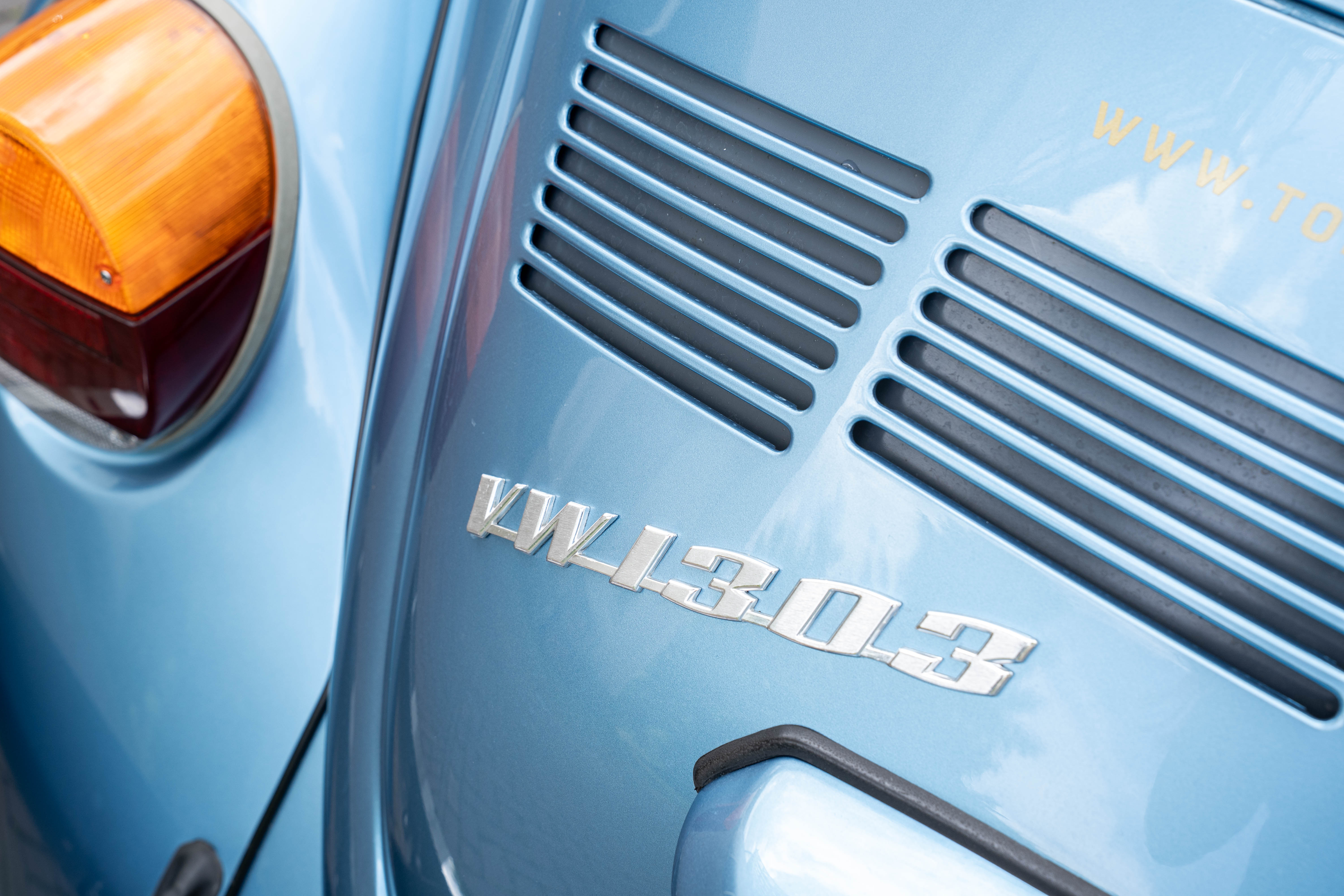
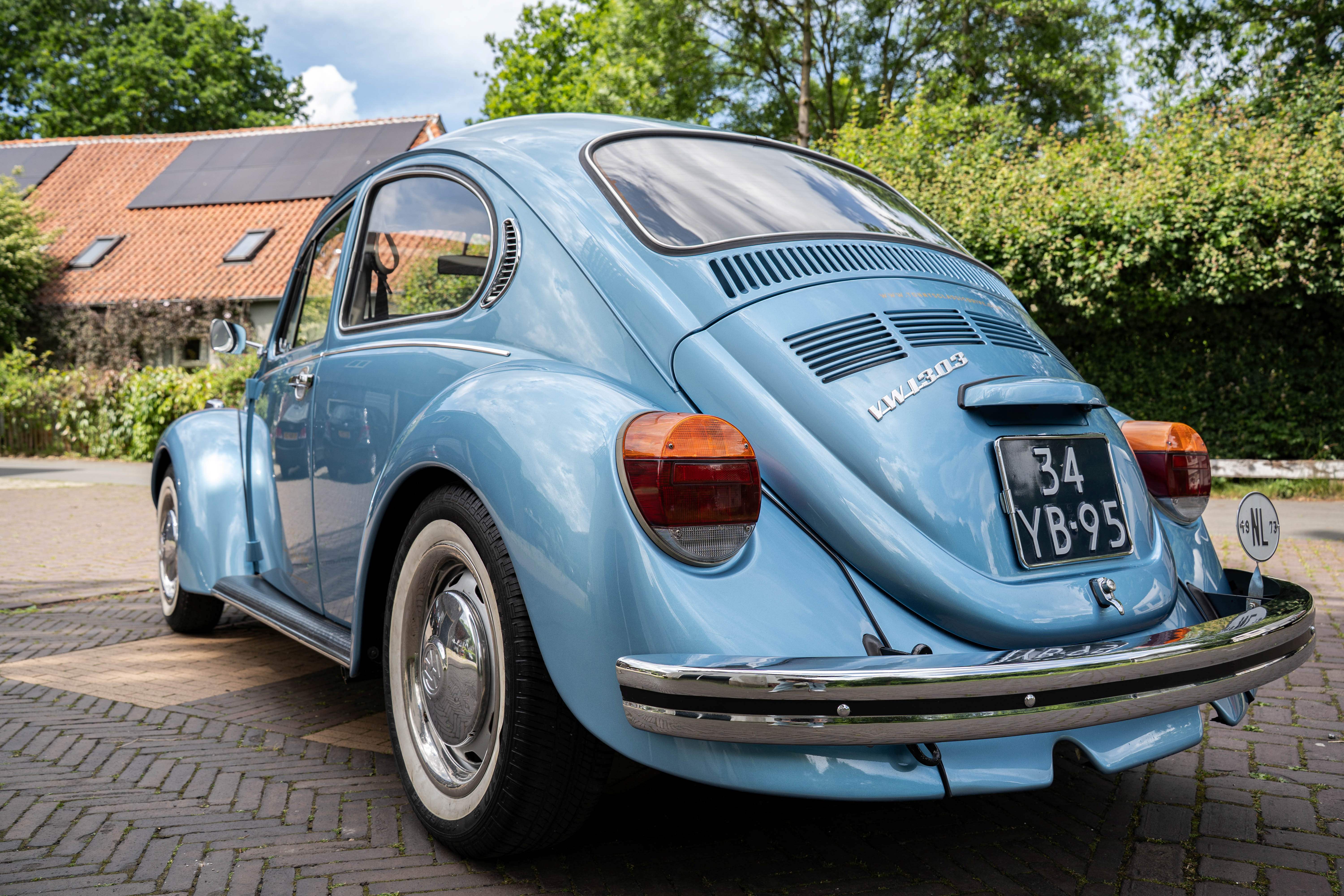
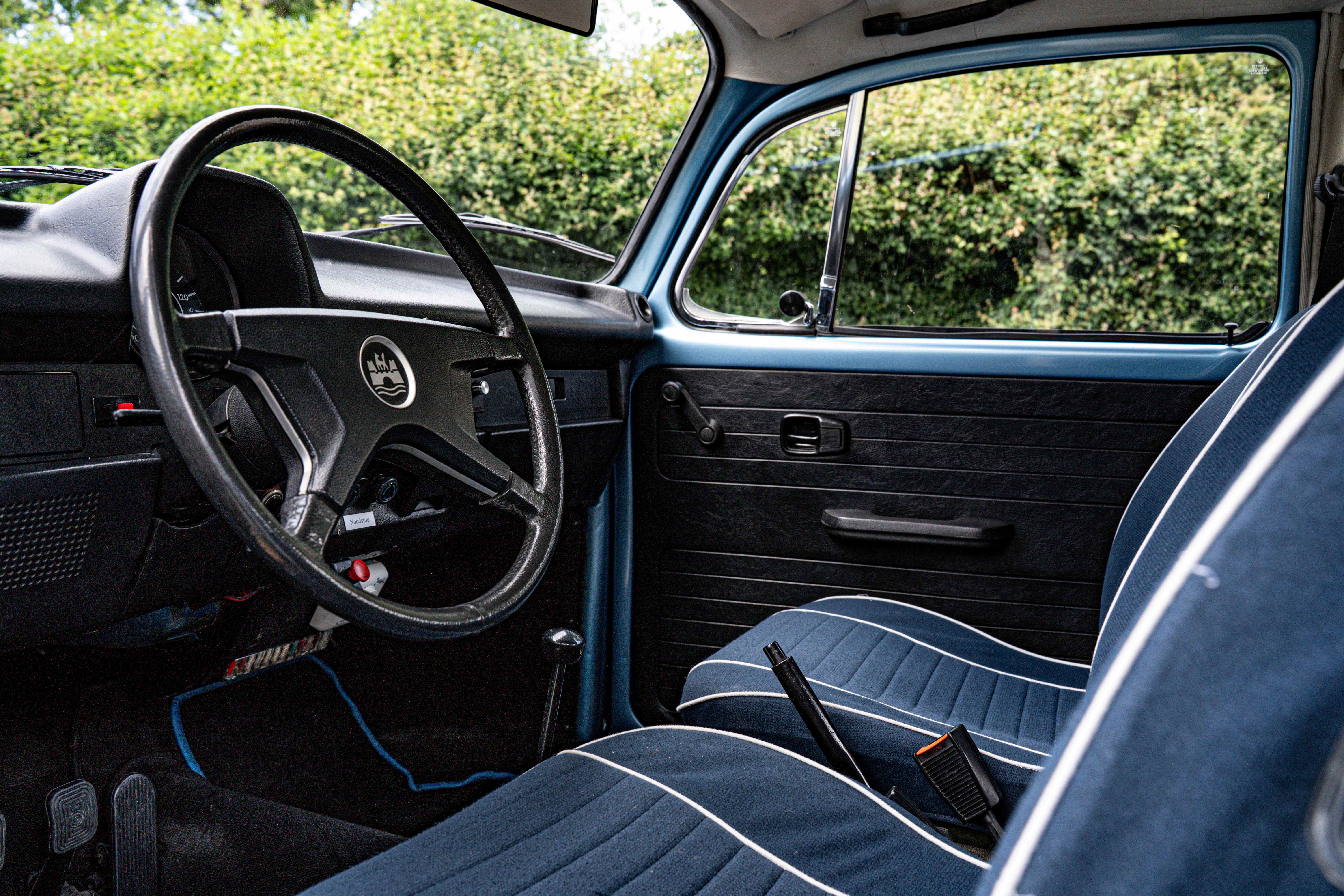
To remain competitive, VW introduced the 1302 and 1303 (the Super Beetles). These had a curved windshield (on the 1303), a different dashboard, and MacPherson struts at the front. This created a larger front luggage space (the spare wheel now lay flat) and a more modern driving feel.
End of VW Beetle Production in Europe and a Second Life in Mexico (1974–2003)
1978 vs 1980: The End in Europe
In the 1970s, the basic concept became outdated. The car was noisy and unsafe compared to modern standards. The Volkswagen Golf (1974) was ready as its successor.
Production in Europe was phased out. On January 19, 1978, the last Beetle sedan rolled off the line at the Emden plant. For most people, the era ended here. However, enthusiasts know better: the Beetle Cabriolet remained in production for two more years at Karmann in Osnabrück, until January 1980.
Mexico and Brazil: The Vocho and Fusca
While Europe switched to the Golf, the Beetle remained hugely popular in Latin America and South Africa. In Mexico (Vocho) and Brazil (Fusca), production ran at full speed. In Mexico City, the green-and-white Beetle taxi became iconic. Until the 1990s, the Beetle remained a top seller there.
The Definitive End: Última Edición
Eventually, time caught up with the Mexican Beetle as well. Stricter emissions requirements and safety regulations made it impossible to keep producing the 1938 design.
In July 2003, the very last classic Beetle rolled off the line in Puebla, Mexico: number 21,529,464. To mark the farewell, the Última Edición was released. This limited series was available in two nostalgic pastel colors: Aquarius Blue and Harvest Moon Beige, fitted with stylish whitewall tires and chrome accents. The last car went directly to the museum in Wolfsburg.
The Legacy and the Future – The Electric Volkswagen Beetle
Retro Design and The Beetle
Volkswagen tried to revive the magic with the New Beetle (1998) and later The Beetle (2011). Although successful as lifestyle cars, they never fully matched the cult status of the original. In 2019, Volkswagen released a “Final Edition” of the modern Beetle, removing the name from price lists for good.
The Future Is Now: Experience our e-Beetle and enjoy a sustainable driving experience
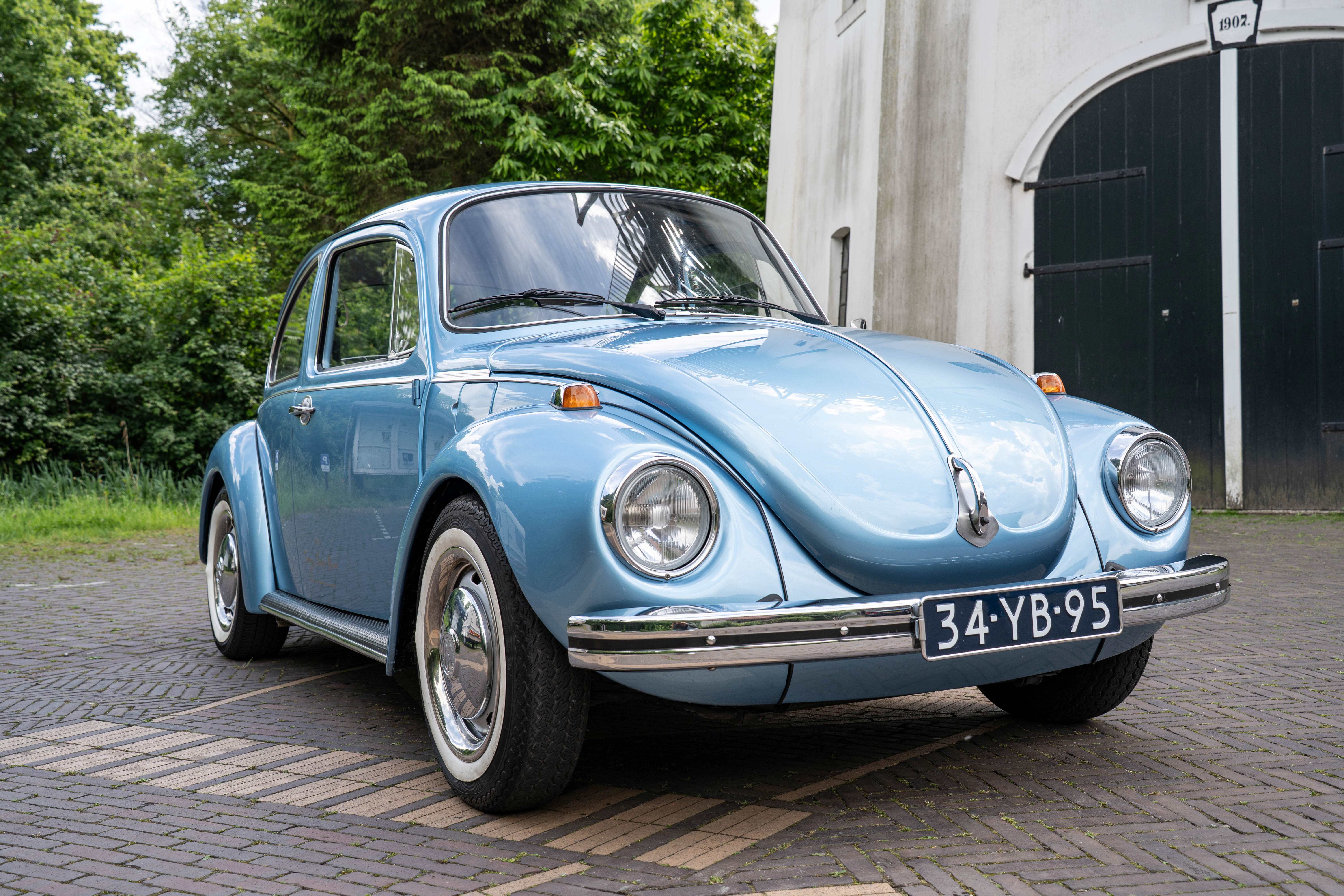
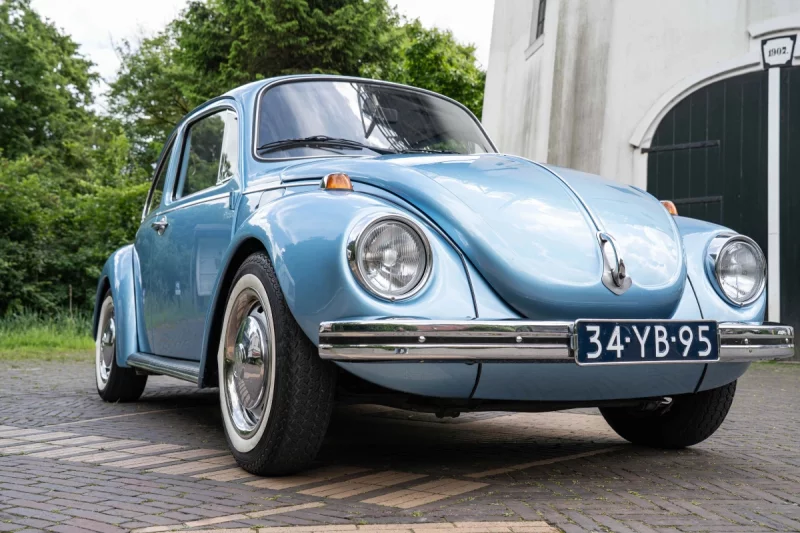
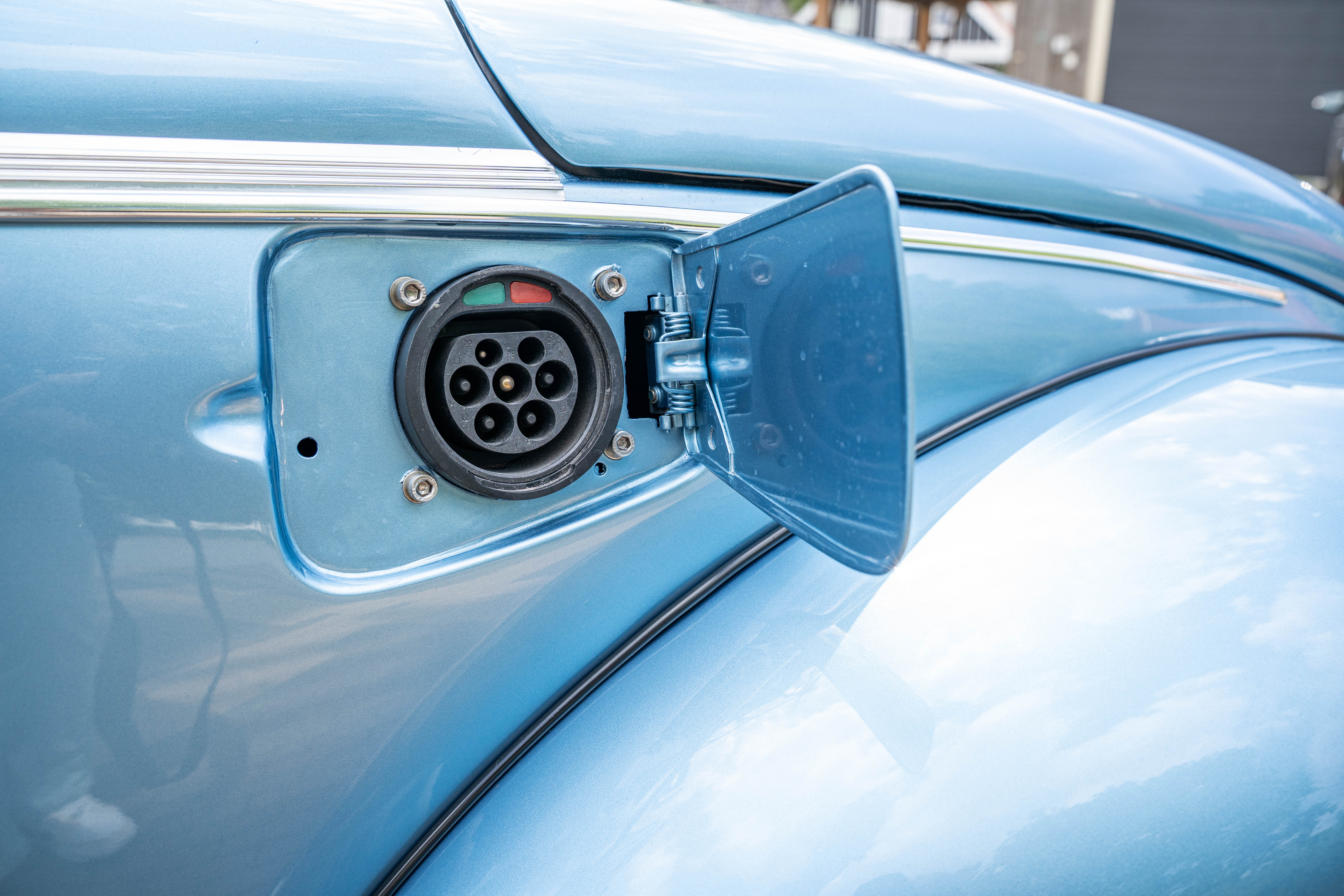
Still, the Beetle’s story as a classic is not over. We now see a fascinating trend in “restomods” and electrification. Specialized companies convert old Beetles to fully electric drivetrains. That’s how the icon of the 20th century drives into the 21st: classic charm, but without emissions.At Tonny's Classic Drive we bring these worlds together for a sustainable driving experience. You don’t have to dream about what it feels like to drive such a modern classic—you can experience it yourself. Our electric Volkswagen Beetle combines the look of a classic Beetle with modern, emission-free technology. We proudly present our Volkswagen Beetle “Baby Blue Metallic”.
This unique version has been fully converted to electric power. It’s an intimate two-seater, perfect for a romantic weekend away or a stylish wedding. You enjoy a classic Beetle, the iconic rounded dashboard, and the classic look, while gliding silently through the Groningen countryside on electric power. It’s nostalgia without compromise.
Want to make history in our electric Baby Blue? View the VW Beetle Baby Blue Metallic EV here and book your drive directly.
Why the Beetle is still the “King of the Road”
The classic Beetle is a lesson in design, marketing, and sociology.
- Democratization: It made motoring accessible to ordinary people, from Germany to Brazil.
- Timelessness: A Beetle from 1949 and one from 2003 share hardly any parts, yet they are visually family. The “form follows function” principle is elevated to art here.
- Emotion: Ask someone about a Beetle, and you’ll undoubtedly get a story.
Today, the classic Beetle is a beloved collector’s item. And thanks to innovative electrification, it is now ready for the future as well. The e-Beetle lives on.
Fact Table: The Beetle in Numbers
| Specification | Detail |
|---|---|
| Spiritual Father | Ferdinand Porsche (concept), Erwin Komenda (shape) |
| Production Period | 1938 – 2003 (Classic model) |
| Total Produced | 21,529,464 units |
| Production Locations | Including Germany, Mexico, Brazil, South Africa, Australia, Belgium |
| Engine | Originally a 4-cylinder boxer (now also available with electric drive) |
| Last European sedan | 1978 (Emden) |
| Last European convertible | 1980 (Karmann, Osnabrück) |
| Successor | Volkswagen Golf (functional), New Beetle (spiritual) |
Conclusion
The history of the Volkswagen Beetle is a story of extremes. Born in one of humanity’s darkest periods, it grew into a global beacon of freedom and joy. It’s a machine that changed the world by simply staying true to itself. Whether you love the rumble of boxer engines or the silence of electric drive, you can’t ignore the Beetle. At Tonny’s Classic Drive, the Volkswagen Beetle classic lives on as an electric Beetle, ready for a new generation of drivers. Ready for a unique experience in an electric icon? Discover and check availability of our Baby Blue e-Beetle. Classic and sustainable.